
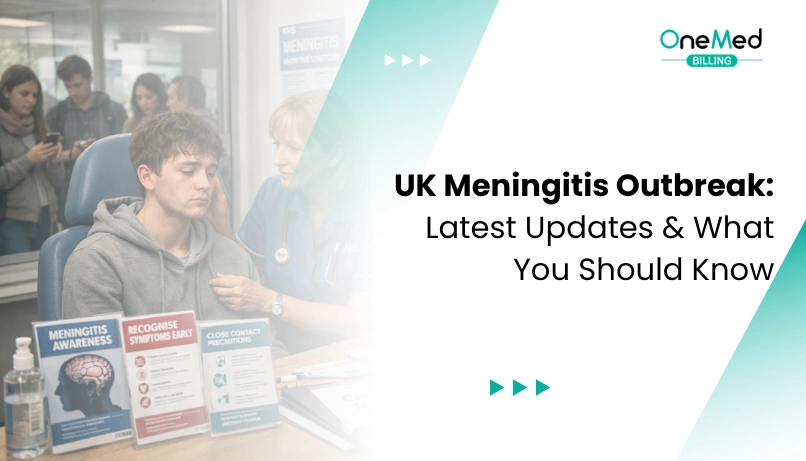
Meningitis Outbreak in the UK: What You Need to Know
- March 31, 2026
The recent outbreak of meningitis in the United Kingdom has brought conjectures between the health authorities and the general population. Having sporadically been on the rise in cases in some areas of England, especially in Kent, the situation has raised many eyebrows and brought into question the severity of the situation. Meningitis is a severe disease that impacts the layer of the brain and the spinal cord and some cases may develop rapidly without treatment.
The United Kingdom health authorities have verified about 27 cases associated with the current outbreak with majority of infections in the county of Kent and the surrounding regions. There are also cases that have been reported in the student circles, giving an indication that the spread could be related to social activities in the close contact settings.
It is found to be an infection of Meningitis B, which is a form of bacteria that develops quickly and has severe causes. It is thought that a mass social event in Canterbury could have been a likely source as it is at this venue that transmission must have taken place between people in close contact.
Why This Outbreak Is a Cause for Concern
Although the confirmed cases might not be that high, the nature of Meningitis B is causing health experts to take the outbreak with urgency. This is a strain that is also very harmful since it may develop rapidly and cause serious complications that may even cause death unless it is treated at the initial stages.
It has already led to at least two deaths due to the outbreak, which further shows its severity. Moreover, the trend of the expansion in tight social circles predisposes the further spread, so it is significant that the authorities should act as quickly as possible and people should take care of one another.
Who Is Most at Risk
The probability of succumbing to meningitis in this outbreak does not spread across the population in an equal manner. The teenagers and young adults are more vulnerable especially those who are in university settings or student quarters.
These populations tend to have high social contacts thus making the infection to spread. People who participated in large events or live in dorms are also more vulnerable since there is a long and close contact with others. Although the general population is not at the high risk at present, these particular groups are in need of more awareness and preventative action.
How Meningitis Spreads
The transmission of meningitis B occurs mainly when there are intimate and excessive physical contacts with an infected individual. This involves coughing, sneezing or sharing of personal belongings like beverages, knives and forks and cigarettes. Transmission can also be achieved by intimate contacts such as kissing.
The spread of meningitis is not easily achieved through the contact of casual or brief contact compared to other viral infections, thankfully, but settings of individuals in close proximity over a prolonged duration are capable of greatly raising the chances. This is the reason why the concept of outbreaks has been associated with social events or shared residential accommodation.
Symptoms You Should Not Ignore
Early identification of the symptoms of meningitis is very important because the disease can deteriorate within a short period of time. The typical symptoms are fever, one may have very high fever, headache, neck stiffness, and light sensitivity.
Patients can also complain of confusion, inability to concentrate, nausea, or vomiting. Sometimes a skin rash can occur, and it is regarded as a severe threat indicator, and the need to visit a doctor as quickly as possible. Due to the rapid development of symptoms, one should not wait to see a physician in case of meningitis.
What Authorities Are Doing
The UK health authorities have acted with speed to contain the outbreak and launch the further spread. Prevention of infection is also done through administration of preventive antibiotics to persons who have been in close contact with confirmed infections and this helps in curbing further infections. Vaccination has also been increased especially to high risk groups including students. Schools and universities are also on the lookout of their communities, and the general health warning is being sent out to increase awareness. Contact tracing is also one of the strategies, which can be used to identify and protect people who might have been exposed.
Should People in India Be Concerned
Currently the outbreak is still localized in the United Kingdom and no reports have been given of the same spread in India. This implies that the general population in India does not have any cause of concern at hand. Nevertheless, the level of awareness regarding meningitis should not be neglected since the disease can be present in any area under the condition of a proper situation. Symptom awareness and timely medical attention is a major way of reducing risks. The best thing to do in this case is to remain updated without being overly panicked.