
What Is Charge Entry and How It Affects Billing Revenue?
- Updated Date Sep 8, 2026
- Charge Entry
- Follow
Your provider completed the visit, the documentation is ready, and the claim should be moving toward payment. But one missed unit, wrong modifier, incorrect charge amount, or skipped service line can quietly reduce what the practice collects.
That is where charge entry becomes more than data entry.
Charge entry is the point where clinical work turns into billable revenue. Every service performed has to be captured correctly, matched with the right codes, linked to the right provider, and entered with the correct units, charges, date of service, and insurance details.
When this step is weak, the damage does not always show immediately. It may appear later as underpayments, denials, delayed claims, duplicate billing, or missed revenue that no one catches until reports stop matching expected collections.
For practice owners, it is about making sure every completed service is billed correctly the first time, so the practice does not lose money after the patient has already been treated.
What Is Charge Entry in Medical Billing?
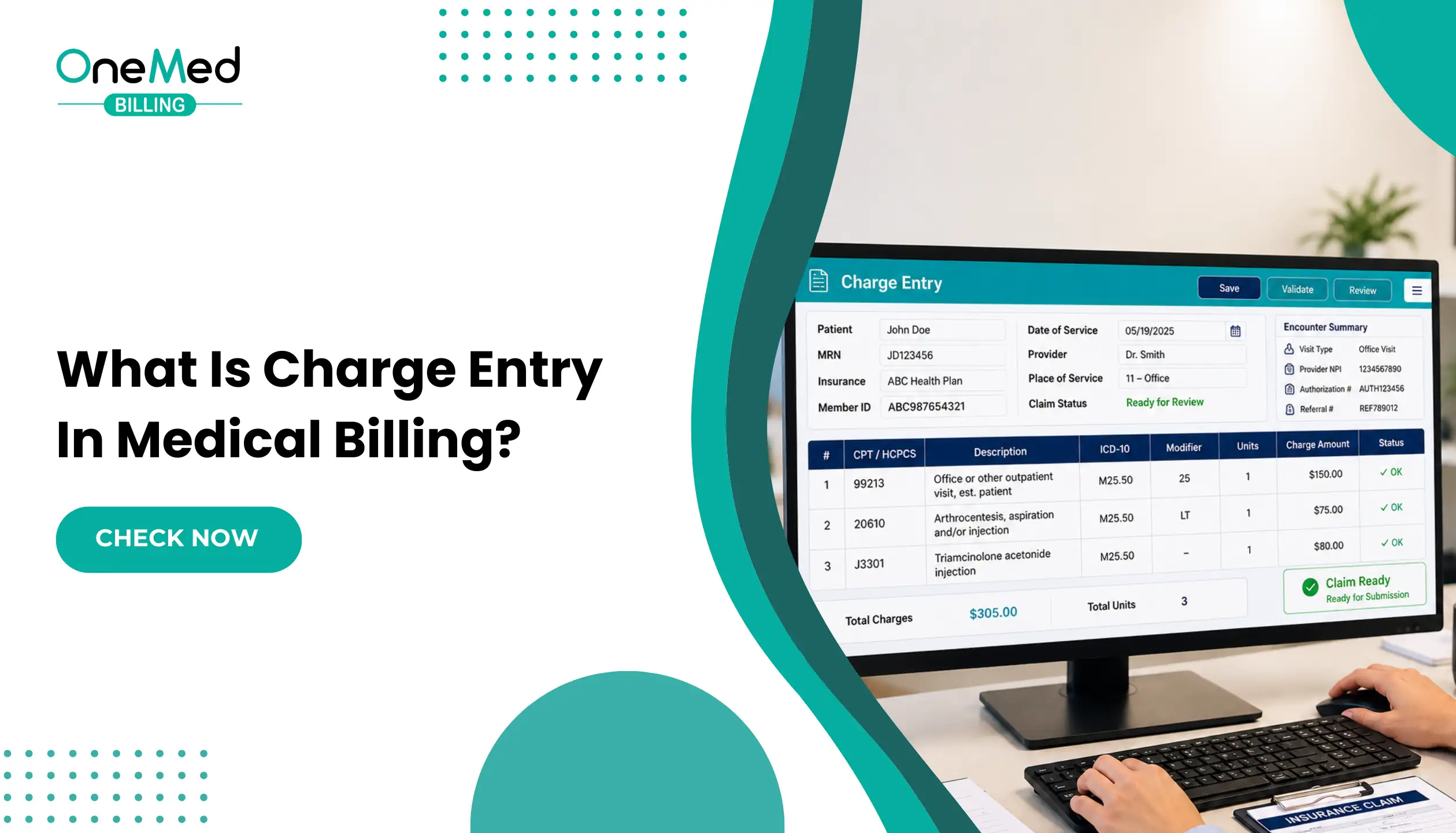
Charge entry in medical billing is the process of entering all billable services from a patient encounter into the billing system. This includes the procedures performed, diagnosis codes, modifiers, units, provider details, date of service, place of service, charges, and insurance information.
In simple terms, charge entry converts the provider’s work into a claim that can be submitted to insurance.
If the charge is entered correctly, the claim has a better chance of being processed and paid without delays. If the charge is entered incorrectly, the practice may face denials, underpayments, missed charges, or unnecessary rework.
For example, if a provider performs a procedure but the charge entry team misses a modifier, enters the wrong unit, or selects the wrong provider, the claim may not reflect what actually happened during the visit. That small mistake can affect reimbursement.
Why Charge Entry Matters for Practice Owners?
Charge entry is one of the first places where practice revenue can either be protected or lost. Once the provider completes the visit, every billable service must be entered correctly before the claim is created.
A strong charge entry process helps practice owners:
- Capture every billable service, procedure, test, supply, and unit provided during the visit
- Prevent missed revenue from services that were performed but never entered into the billing system
- Make sure charges match the provider documentation, CPT/HCPCS codes, diagnosis codes, modifiers, and units
- Reduce avoidable denials caused by wrong codes, missing modifiers, incorrect units, or mismatched service details
- Submit claims faster by avoiding delays between documentation completion and charge entry
- Improve reimbursement accuracy by making sure the billed amount reflects the service actually provided
- Reduce underpayments caused by incorrect charge amounts, missing units, or fee schedule mismatches
- Avoid duplicate billing by checking whether the same service has already been entered
- Keep cash flow more predictable by moving clean claims into submission quickly
- Reduce billing team rework by catching charge errors before the claim reaches the payer
- Improve reporting accuracy because entered charges affect revenue reports, provider productivity, and collection tracking
The question is not just whether charges are being entered. The real question is whether they are being entered completely, correctly, and on time. A weak charge entry process can quietly create missed revenue, delayed claims, denials, and payment gaps before anyone notices.
Charge Entry Process That Helps Protect Practice Revenue
The charge entry process starts after the patient visit is completed and the provider documentation is ready. At this stage, the billing team reviews the encounter details and enters the billable services into the billing system so a claim can be created.
A proper charge entry process usually includes these steps:
1. Review the Patient Encounter
The billing team reviews the encounter form, superbill, EHR notes, or provider documentation to understand what services were performed during the visit.
This helps confirm whether the provider performed an office visit, procedure, test, injection, therapy session, supply usage, or any other billable service.
2. Check the Codes and Services
The team verifies that the correct CPT, HCPCS, ICD-10 codes, modifiers, and units are available and match the provider documentation.
This step is important because the codes must support the service provided. If the diagnosis does not support the procedure, or if a modifier is missing, the claim may be delayed or denied.
3. Verify Patient and Insurance Details
Before charges are entered, the team checks patient demographics, insurance information, member ID, payer details, authorization number, referral information, and date of service.
Even if the codes are correct, wrong patient or insurance details can cause the claim to reject before payment review.
4. Enter Charges Into the Billing System
Once the details are verified, the billing team enters the charges into the practice management or billing system.
This includes:
- Date of service
- Provider details
- Place of service
- CPT/HCPCS codes
- Diagnosis codes
- Modifiers
- Units
- Charge amount
- Insurance details
- Authorization or referral number, if needed
5. Review Charges Before Submission
After entry, the charges should be checked for missing details, duplicate entries, wrong units, incorrect modifiers, mismatched codes, or fee schedule errors.
This review helps catch mistakes before the claim is submitted to the payer.
6. Move the Claim to Submission
Once the charge is entered and reviewed, the claim is prepared for submission. A clean charge entry process helps the claim move forward with fewer errors, fewer denials, and less rework for the billing team. From here the claim moves into electronic claim submission, where clearinghouse edits and payer formatting requirements apply.
The charge entry process is important because it controls whether completed services are captured correctly and billed on time. If this step is delayed or inaccurate, revenue can be missed before the claim even reaches the insurance company.
What Information Is Entered During Charge Entry?
Charge entry includes all the details needed to turn a patient visit into a billable claim. It is not just entering a code or charge amount. The billing team must make sure the patient, provider, service, payer, and charge details all match the documentation before the claim is submitted.
The information entered during charge entry usually includes:
- Patient name, account number, date of birth, and insurance details
- Date of service for the visit, test, procedure, or treatment
- Rendering provider, billing provider, NPI, and practice location
- Place of service, such as office, hospital, facility, telehealth, or outpatient setting
- CPT or HCPCS codes for the service, procedure, supply, medication, or equipment
- ICD-10 diagnosis codes that support the medical need for the service
- Modifiers that explain special billing circumstances or payer requirements
- Units for services, drugs, supplies, procedures, or time-based billing
- Charge amount based on the practice fee schedule or payer contract
- Prior authorization or referral details when required
- Payer name, plan type, member ID, and claim routing information
Common Charge Entry Errors That Cause Claim Problems
Charge entry errors can create claim issues even when the provider documentation is correct. The problem often starts when a service is missed, entered under the wrong detail, or not matched properly with payer rules.
| Charge Entry Error | What Goes Wrong | Claim Impact |
|---|---|---|
| Missed charge | A service, test, supply, injection, or unit is not entered | Lost revenue because the practice never bills for it |
| Wrong CPT or HCPCS code | The entered code does not match the service documented | Denial, incorrect payment, or coding review |
| Incorrect diagnosis link | The diagnosis does not support the billed service | Medical necessity denial |
| Missing or wrong modifier | Modifier needed for the service is not added or is entered incorrectly | Denial, reduced payment, or claim edit |
| Wrong units | Units are entered too high or too low | Underpayment, overbilling risk, or rejection |
| Wrong date of service | Date entered does not match the encounter or authorization period | Rejection, denial, or payer review |
| Wrong provider or location | Rendering provider, billing provider, NPI, or place of service is incorrect | Provider mismatch or payment delay |
| Duplicate charge | Same service is entered more than once | Duplicate claim denial or compliance concern |
| Fee schedule mismatch | Charge amount does not match the practice fee schedule | Incorrect reimbursement or reporting issue |
| Missing authorization details | Auth or referral number is not entered when required |
Authorization denial |
These errors should be caught before the claim goes out. A simple pre-submission review of codes, units, modifiers, provider details, service date, charge amount, and authorization information can prevent unnecessary denials and protect reimbursement.
How Charge Entry Affects the Revenue Cycle?
Charge entry affects the revenue cycle because it is the point where completed patient care becomes a billable claim. If the charges are entered correctly, the claim can move forward smoothly. If they are missed, delayed, or entered incorrectly, the issue can affect every step after it.
1. It Controls What Gets Billed
If a service is not entered, it may never be billed. This creates direct revenue leakage because the practice provided care but did not capture the charge.
2. It Affects Claim Accuracy
Codes, units, modifiers, provider details, dates of service, and charge amounts must match the documentation. Any mismatch can lead to denials, underpayments, or claim corrections.
3. It Influences Reimbursement Speed
Clean charge entry helps claims move faster to submission and payment. Delayed or incorrect entry slows down the entire billing cycle.
4. It Can Reduce or Increase Denials
Many denials begin with charge entry mistakes, such as missing modifiers, wrong units, incorrect provider details, or authorization information not entered correctly.
5. It Supports Payment Posting and Reporting
Accurate charges help the billing team post payments correctly, track expected reimbursement, and identify underpayments more easily.
6. It Protects Cash Flow
When charges are entered on time and reviewed properly, claims go out faster, payments come in sooner, and A/R stays more controlled.
Best Practices for Accurate Charge Entry
Accurate charge entry starts with a clear review process before the claim is submitted. The goal is to capture every billable service, match it with the documentation, and enter the charge correctly the first time.
Practices can improve charge entry accuracy by:
- Entering charges as soon as provider documentation is complete
- Matching CPT, HCPCS, ICD-10 codes, modifiers, and units with the encounter notes
- Verifying the date of service, provider, NPI, place of service, and location details
- Checking modifiers, units, and charge amounts before submission
- Confirming authorization or referral details when required by the payer
- Reviewing for duplicate charges or missed services
- Using claim scrubbing and recurring error reports to catch issues before claims go out
These checks are important because charge entry mistakes usually do not stay isolated. A missed modifier can become a denial. A wrong unit can become an underpayment. A delayed charge can push the claim further into A/R. Reviewing these details before submission helps the practice catch revenue problems before they reach the payer.
When Should Practices Outsource Charge Entry?
Practices should consider outsourcing charge entry when charges are not being entered on time, errors are increasing, or the billing team is too busy handling claims, denials, payment posting, and follow-ups. Charge entry may look like a simple billing task, but missed units, wrong modifiers, duplicate charges, incorrect provider details, or delayed entries can quickly affect reimbursement.
This is where reliable charge entry services can support the workflow. A trained billing team can help capture charges accurately, review key details before submission, and make sure completed visits turn into clean claims without unnecessary delays. For practice owners, outsourcing makes sense when charge entry starts becoming a bottleneck that slows down billing, increases rework, or causes revenue to slip through unnoticed.
Conclusion
Charge entry is the point where a completed patient visit becomes a billable claim. If this step is accurate, the practice has a better chance of getting paid correctly and on time. If it is rushed or poorly reviewed, the problem can show up later as missed charges, denials, underpayments, delayed claims, or extra billing work.
For practice owners, charge entry should not be treated as basic data entry. It is a revenue control point. Every code, unit, modifier, provider detail, date of service, and charge amount needs to match the documentation before the claim goes out.
A strong charge entry process helps make sure the work already performed by the provider is actually captured, billed, and collected without unnecessary leakage.
Frequently Asked Questions
Find quick answers to common questions about this topic, explained simply and clearly.
What is the next step after charge entry?
Once charges are entered, the next step is to review and scrub the claim for accuracy. This includes checking for coding errors, missing information, or mismatched data. After the claim passes validation, it is submitted electronically to the payor for
What is a charge in medical billing?
A charge is the amount assigned to a medical service or procedure based on the provider’s fee schedule. It reflects what the provider bills before insurance adjustments and is tied to specific CPT or HCPCS codes.
What is the charge entry workflow?
The charge entry workflow starts with reviewing provider documentation, assigning the correct codes, and entering those details into the billing system. Each charge must include accurate patient, provider, and visit information to ensure the claim is a
What is an example of an incorrect charge entry?
An example would be billing a higher-level office visit than what was documented, entering the wrong date of service, or linking the charge to the wrong provider. These mistakes can lead to claim denials or compliance issues.