



Claim Scrubbing in Medical Billing: Process and Clean Claim Benefits
- Updated Date May 13, 2026
- Claims Submission
- Follow
A claim does not always fail because the service was wrong. Many claims get rejected or denied because small billing errors were missed before submission.
A wrong member ID, missing modifier, invalid diagnosis pointer, expired authorization, or payer-specific rule mismatch can stop payment before the claim gets a fair review. These issues may look small, but they create rework, delay reimbursement, increase A/R, and put pressure on the billing team.
This is where claim scrubbing becomes important.
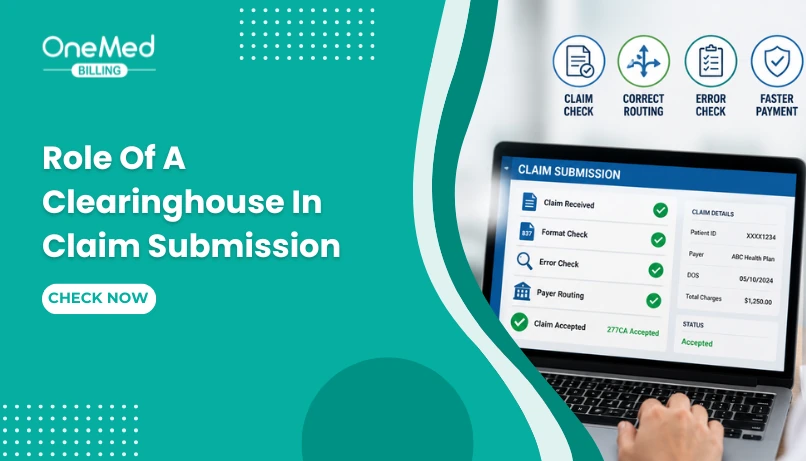
Claim scrubbing helps practices catch these problems before the claim reaches the clearinghouse or insurance payer. It works like a final quality check in the billing process, making sure the claim is clean, complete, and ready for submission.
What Is Claim Scrubbing in Medical Billing?
Claim scrubbing in medical billing is the process of reviewing a claim for errors, missing information, coding issues, and payer-specific rules before it is submitted for payment.
The main goal is to make sure the claim can be accepted and processed as a clean claim. A clean claim is a claim that has the right patient details, correct insurance information, valid codes, proper modifiers, required authorization details, and all mandatory claim fields completed.
Most practices use both automated software and manual review for claim scrubbing. The software catches common errors quickly, while billing staff review flagged claims that need human judgment. This is especially important for complex claims, high-dollar services, specialty billing, and payer rules that need closer review.
What Claim Scrubbing Actually Audits?
Claim scrubbing is designed to identify the most common issues that prevent claims from being processed smoothly by payers. These errors typically fall into several key categories that directly impact claim acceptance and reimbursement.
Here are the key categories of errors that claim scrubbing typically catches.
1. Patient & Insurance Data Errors
Claim scrubbing detects incorrect or missing patient demographics, subscriber ID numbers, group numbers, payer selection, and coverage status. Even small front-end mistakes such as a mismatched name or inactive insurance policy, can trigger immediate claim rejection, making data validation one of the most critical error checks.
2. ICD-10 and CPT Conflicts
Scrubbing systems check whether the diagnosis codes support the procedures billed. They flag invalid code combinations, outdated codes, incorrect diagnosis pointers, and modifier issues that may delay payment. This is important because payers use ICD-10 and CPT code relationships to judge medical necessity. If the diagnosis does not support the service billed, the claim may be denied.
CMS also uses NCCI edits to identify code combinations that should not normally be billed together. Since these edits can change at least quarterly, claim scrubbing rules should be updated regularly. Experian Health reported that preventing claim denials is a top priority for 82% of healthcare organizations, and 68% of providers say clean claim submission is more challenging than a year ago.
3. Modifier Mistakes
Claim scrubbing identifies missing, incorrect, or incompatible modifiers that affect how services are reimbursed. This includes misuse of multiple procedure modifiers, bilateral service indicators, and modifiers that are not allowed with certain CPT codes, all of which commonly result in reduced payments or claim denials.
4. Authorization & Referral Issues
Many services require prior authorization or referral approval for coverage. Scrubbing flags missing authorization numbers, expired approvals, services exceeding authorized limits, and claims where referrals are required but not attached, helping prevent high-value denials tied to coverage conditions.
5. Coverage & Frequency Violations
Insurance plans often restrict how often certain services can be billed or exclude specific treatments altogether. Claim scrubbing catches duplicate claims, over-frequency billing, non-covered procedures, and benefit exclusions before submission, reducing avoidable denials and compliance risk.
6. Technical Billing Errors
Scrubbing also reviews required electronic claim fields and billing structure, including provider identifiers, place of service codes, units of service, charge formatting, and mandatory data elements. These technical errors commonly lead to immediate clearinghouse rejections if not corrected.
Manual Claim Scrubbing vs Automated Claim Scrubbing
Claim scrubbing can be done manually, through software, or by using both together. Most practices get better results when automation handles the first review and trained billing staff review the claims that need closer attention.
| Area | Manual Claim Scrubbing | Automated Claim Scrubbing |
|---|---|---|
| How it works | Billing staff review the claim details, codes, modifiers, and payer rules before submission | Software scans the claim using built-in rules, payer edits, and coding checks |
| Speed | Slower because each claim needs human review | Faster because many claims can be checked within seconds |
| Best used for | Complex, high-dollar, specialty, or high-risk claims | Routine claims, bulk claim checks, and common error detection |
| Accuracy depends on | Staff experience, payer knowledge, and attention to detail | Rule setup, software updates, and payer edit accuracy |
| Main strength | Human judgment for complex billing situations | Fast detection of missing data, coding conflicts, and formatting issues |
| Main limitation | Time-consuming and harder to scale for large claim volume | May miss context that requires human review or documentation judgment |
| Best approach | Use for flagged claims and complex cases | Use as the first layer of review before manual follow-up |
The best approach is not choosing one over the other. Automated scrubbing helps catch common errors quickly, while manual review adds the judgment needed for complex claims, payer-specific rules, medical necessity concerns, and documentation issues.
How the Claim Scrubbing Process Works?
Claim scrubbing follows a clear review process before a claim is sent to the clearinghouse or payer. Each step checks a different part of the claim so errors can be corrected before they delay payment.
Step 1. Patient and Insurance Verification
The first step is to check whether the patient and insurance details are correct. This includes the patient’s name, date of birth, member ID, group number, payer name, and coverage status.
If this information is wrong or does not match the payer’s records, the claim may be rejected before it is even reviewed.
Step 2. Coding Review
Next, the claim is reviewed for CPT, ICD-10, HCPCS, and modifier accuracy. The system checks whether the diagnosis supports the service billed and whether the procedure codes, diagnosis codes, and modifiers work together.
This helps catch coding conflicts that may lead to medical necessity denials, underpayment, or payer review.
Step 3. Authorization and Referral Check
Some services require prior authorization or a referral before they can be paid. During this step, the claim is checked to confirm that the required authorization or referral is present, valid, and linked to the correct service.
If the authorization is missing, expired, or does not match the procedure, the claim can be denied even when the service was provided correctly.
Step 4. Payer-Specific Rule Check
Different payers may have different rules for the same service. A claim may need a specific modifier, place of service, billing format, or supporting information based on the payer’s policy.
Claim scrubbing applies these payer-specific edits before submission so the claim meets the payer’s requirements.
Step 5. Error Flagging
If the scrubber finds an issue, the claim is flagged instead of being submitted. The flagged error may relate to missing data, invalid codes, incorrect modifiers, duplicate billing, missing authorization, or payer rule conflicts.
This gives the billing or coding team a chance to fix the issue before the claim reaches the payer.
Step 6. Correction and Final Review
Once the issue is corrected, the claim is reviewed again to make sure it is ready for submission. This final check helps confirm that the correction did not create another error.
Only after the claim passes the final review should it be released for electronic claim submission to the clearinghouse or payer.
Step 7. Submission and Trend Tracking
After the claim is submitted, the billing team should still track rejections and denials. If the same errors keep happening, the scrubbing rules or internal workflow need to be updated.
This turns claim scrubbing into a prevention system, not just a one-time error check.
Claim Scrubbing vs Claim Rejection vs Claim Denial
Claim scrubbing happens before the claim is submitted. A claim rejection usually happens before payer adjudication, often because of missing data, formatting issues, invalid member details, or clearinghouse edits. A denial happens during the claim adjudication process, when the payer reviews coverage, medical necessity, coding, authorization, and policy rules before deciding whether to pay, adjust, or deny the claim.
This difference matters because rejected claims are often easier to correct and resubmit, while denied claims may require documentation, appeals, or additional follow-up. Strong claim scrubbing helps prevent both, but it is especially useful for stopping simple errors before they turn into payment delays.
| Area | Claim Scrubbing | Claim Rejection | Claim Denial |
|---|---|---|---|
| When it happens | Before the claim is submitted | Before the payer fully processes the claim | After the payer reviews the claim |
| What it means | The claim is checked for errors before submission | The claim is not accepted for processing | The claim is accepted but payment is refused |
| Common reasons | Missing patient data, coding conflicts, modifier issues, missing authorization, payer rule errors | Wrong member ID, invalid payer information, missing required fields, formatting errors, clearinghouse edits | Medical necessity issues, coverage limits, no authorization, incorrect coding, late filing, policy exclusions |
| Who catches it | Billing software, clearinghouse edits, or billing team review | Clearinghouse or payer front-end system | Insurance payer during claim adjudication |
| How serious it is | Preventive step, not a payment decision | Usually easier to correct and resubmit | More serious because it may need appeal, records, or payer follow-up |
| Impact on payment | Helps prevent delays before they happen | Delays payment until the claim is corrected and resubmitted | Can delay or reduce payment and may lead to write-offs if not resolved |
| Best action | Fix errors before claim submission | Correct the issue quickly and resubmit |
Review the denial reason, gather support, appeal if needed, and update future workflows |
Best Practices for Effective Claim Scrubbing
Effective claim scrubbing combines properly configured technology, updated payer requirements, human oversight, and performance monitoring to consistently reduce rejections and denials while improving reimbursement speed.
1. Software Configuration and Custom Edit Rules
Claim scrubbing software should be customized for each payer’s billing requirements rather than relying on default settings. This includes setting edits for diagnosis and procedure compatibility, modifier rules, authorization fields, coverage limitations, and required claim data so errors are caught before submission instead of after rejection.
2. Regular Updates for Payer Rules and Policies
Payers frequently change coverage guidelines, authorization requirements, and billing restrictions, which can quickly make scrubbing rules outdated. Keeping systems updated based on payer policy changes and denial trends helps prevent recurring denials caused by new or revised billing requirements.
3. Manual Review for High-Risk and Complex Claims
Automation speeds up error detection, but complex claims still require human review for medical necessity, modifier accuracy, authorization compliance, and payer-specific policies. Reviewing high-dollar or complicated services adds an extra layer of protection against costly denials.
4. Feedback Loops Based on Rejections and Denials
Denied and rejected claims should be analyzed regularly to identify recurring issues and gaps in scrubbing rules. Using this data to update software edits and improve workflows turns denial management into a prevention strategy rather than a correction process.
How Claim Scrubbing Prevents Avoidable Revenue Loss?
Claim scrubbing helps practices protect revenue before the claim reaches the payer. Many payment delays do not happen because the service was wrong. They happen because small errors were missed before submission.
A wrong member ID, missing authorization number, invalid modifier, outdated code, or diagnosis that does not support the procedure can stop a claim from moving forward. Once that happens, the billing team has to correct, resubmit, follow up, or appeal the claim. That adds time, increases workload, and slows down collections.
Strong claim scrubbing reduces this risk by catching these issues early. It helps more claims go out clean the first time, which means fewer rejections, fewer avoidable denials, and less back-and-forth with payers.
It also helps billing teams focus on the claims that truly need attention instead of spending hours fixing basic errors. Over time, this improves payment speed, reduces A/R delays, and keeps cash flow more predictable.
How We Help Your Practice Submit Cleaner Claims?
We help practices catch claim issues before they turn into rejections, denials, or payment delays. Our team reviews claims before submission with a focus on accuracy, payer rules, coding consistency, authorization requirements, and common denial risks.
Instead of treating claim scrubbing as a last-minute software check, we make it part of our claim submission services so each claim is reviewed before it is released. This includes checking for missing patient details, insurance mismatches, coding conflicts, modifier issues, authorization gaps, duplicate billing risks, and payer-specific requirements.
This helps practices send cleaner claims the first time and reduce the time spent on corrections, resubmissions, and avoidable follow-ups.
Our Claim scrubbing support, practices can improve:
- Fewer front-end claim rejections
- Lower risk of preventable denials
- Cleaner claim submission
- Faster reimbursement turnaround
- Less rework for internal staff
- Better compliance with payer requirements
- More predictable cash flow
For providers, the value is simple. Claims move out with fewer avoidable errors, payments are less likely to get stuck, and the billing team gets a stronger process for protecting revenue before claims reach the payer.
Frequently Asked Questions
Find quick answers to common questions about this topic, explained simply and clearly.
What is the most common issue detected by a claim scrubber?
The most common issues caught by claim scrubbers are missing or incorrect patient and insurance information, such as wrong subscriber IDs, inactive coverage, or incomplete required fields. These small data errors are responsible for a large percentage
What does scrubbing claims mean?
Scrubbing claims means reviewing medical claims for errors, missing details, and payer-specific rules before sending them to insurance companies. The goal is to catch problems early so claims can be processed as clean claims instead of being rejected o
What service is used to scrub a claim for errors?
Claims are typically scrubbed using claim scrubbing software built into billing systems or clearinghouses, along with manual review by billing specialists. The software checks claims against payer rules and formatting requirements, while human reviewer
What is the process of scrubbing?
The claim scrubbing process starts after coding is complete and before claims are submitted to insurers. Claims are scanned for patient data accuracy, code compatibility, modifier use, authorization requirements, coverage limits, and technical billing