

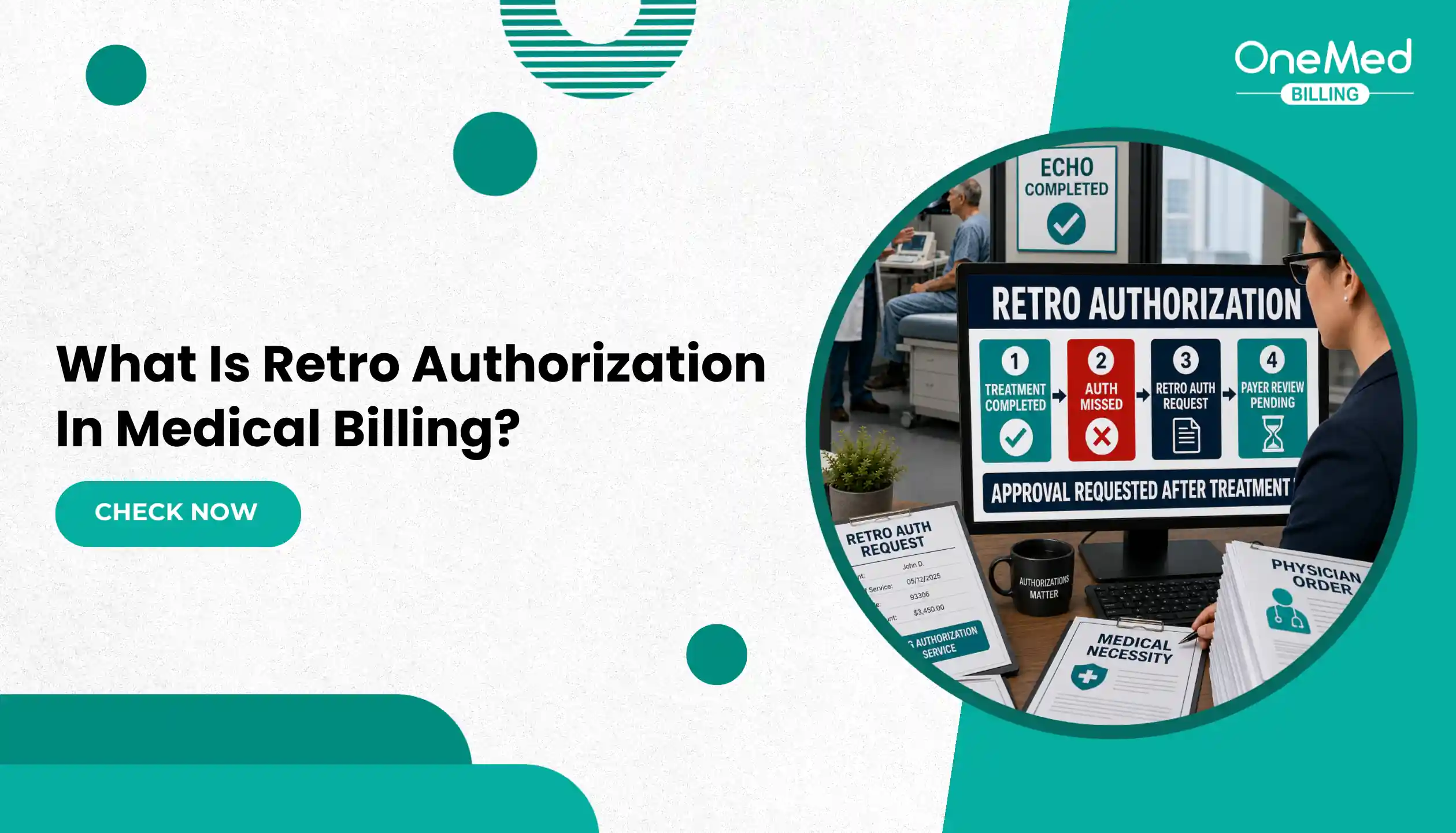



What Is Retro Authorization In Medical Billing?
- Updated Date Sep 5, 2026
- Prior Authorization
- Follow
Retro authorization is insurance approval requested after a medical service has already been provided, instead of before it. It applies mainly to urgent or emergency care, where waiting for approval was never possible. A denied claim tied to missing authorization rarely means the care was wrong. It usually means one approval step happened too late.
What Retro Authorization Means In Medical Billing?
Retro authorization means requesting insurance approval after a service has already been provided. It happens when care starts before prior authorization gets obtained, often during urgent visits, scheduling gaps, or unclear coverage checks.
The core difference from prior authorization is sequence, not paperwork. Prior authorization asks a payer to approve a service before it happens. Retro authorization asks the same question after the fact, once the claim already reflects a completed service. That reversed order is exactly why payers treat retro requests with more scrutiny. The approval is no longer a gate before spending, it is a request to pay for something that already happened.
Common situations include:
- A patient receiving an MRI, surgery, or specialist visit before anyone flagged the authorization requirement
- A claim that gets rejected for missing authorization, forcing the billing team to submit documentation after the fact
- High-volume clinics and hospitals where fast-moving care makes retro requests a regular occurrence
Retro authorization is one of several types of authorization in medical billing, and knowing where each one fits helps billing teams catch gaps before they turn into denials.
When Retro Authorization Requests Come Up?
Retro authorization usually enters the workflow after a claim has already been created, often after a denial. Two patterns explain a large share of these cases:
- The service moved quickly, and the authorization requirement surfaced later during claim review
- Patients arrived through urgent referrals or emergency situations where treatment could not wait for approval
The Retro Authorization Process In Six Steps
| Step | What Happens |
|---|---|
| 1. Identify the issue | A denial code or payer message flags the missing authorization |
| 2. Review requirements | The billing team checks the payer's retro policy, deadlines, and documentation rules |
| 3. Gather documentation | Provider notes, diagnosis details, and medical necessity support get compiled |
| 4. Submit the request | The request goes to the payer through their portal, fax, or authorization platform |
| 5. Payer review | The insurer evaluates coverage rules and medical necessity, then approves, denies, or asks for more information |
| 6. Update or appeal | Approved claims get resubmitted for payment. Denied claims move into the appeal process |
This workflow can stretch over several weeks in busy practices. Organized tracking and fast follow-ups keep revenue from slipping through the process.
Documents Needed For Retro Authorization Approval
Payers want proof the care was necessary and followed coverage rules, not just confirmation that a service happened. Typical documentation includes:
- Provider clinical notes
- Diagnosis and procedure support
- Test results or imaging reports
- Physician orders or referrals
- A medical necessity statement
Missing even one item can trigger an automatic denial and push the claim into a time-consuming appeal.
How Long You Have To Submit A Retro Authorization Request?
Every payer sets its own window, and missing it usually means an automatic denial regardless of medical necessity.
| Typical Window | Common With |
|---|---|
| 30 days | Certain Medicaid programs and strict plans |
| 60 days | Common across many insurers |
| 90 days | One of the more frequent ranges |
| Up to 120 days | Some commercial insurers and exceptions |
Prior authorization approval times are shorter and more predictable, which is why securing approval before the service happens stays the safer route whenever it is possible. For the actual numbers behind that gap, prior authorization turnaround times are worth checking directly.
Reasons Retro Authorization Requests Get Denied
- Clinical documentation is missing or incomplete
- Payer-specific retro rules and deadlines are unclear to the billing team
- Provider notes, referrals, or test reports arrive late
- The request gets submitted after the payer's retro window closes
- Communication breaks down between the front office, clinical staff, and billing
These gaps build into backlogs of pending claims and growing appeal workloads over time.
Tips To Improve Retro Authorization Approval Rates
- Catch authorization gaps early. Reviewing claims before submission gives the team more time to gather documentation before deadlines close.
- Submit complete medical documentation. Detailed provider notes and clear necessity support raise approval odds, especially for urgent care.
- Track payer-specific timelines. Every insurer sets a different retro window, and prioritizing requests near expiration prevents automatic denials.
- Keep front desk, providers, and billing aligned. Fewer services fall into retro status when authorization requirements are communicated early.
- Follow up on pending requests regularly. Requests that sit unmonitored are the ones that get overlooked and expire.
Real Example: Retro Authorization In A Cardiology Practice
A patient visits a cardiology clinic with ongoing chest discomfort. The provider orders an echocardiogram the same day. Coverage gets verified, but the requirement for authorization on this specific test goes unnoticed.
The claim gets denied once submitted. Since the service already happened, prior authorization is no longer an option. The billing team submits a retro authorization request instead, backed by the provider's clinical notes and the original test order.
The payer approves the request. The claim gets resubmitted, and the clinic recovers payment instead of writing off the service.
Keeping Retro Authorization From Becoming A Revenue Problem
Retro authorization exists because care cannot always wait for paperwork. Handled with organized documentation and fast follow-up, it recovers payment that would otherwise get written off. Left unmanaged, it turns into denied claims and slower cash flow.
Practices handling a growing volume of retro requests often reach a point where tracking deadlines, payer rules, and documentation across every case becomes hard to sustain internally. That is usually when working with a dedicated prior authorization service starts making sense, alongside strong denial management and AR follow-up support to keep revenue moving.
Frequently Asked Questions
Find quick answers to common questions about this topic, explained simply and clearly.
Is retro authorization the same as prior authorization?
No. Prior authorization happens before a service is provided. Retro authorization happens after, when approval was missed or the requirement was identified late. Prior authorization itself often gets confused with other approval types, and the difference between precertification and preauthorization is a common source of that confusion.
Is retro authorization different from predetermination?
Yes. Predetermination is an optional, non-binding check of coverage, usually done before a service to estimate whether a claim is likely to be paid. Retro authorization is a required approval step submitted after care has already happened. The difference between predetermination and prior authorization breaks down how the two get used differently across payers.
Can a retro authorization request be denied?
Yes. Missing documentation, late submission, or unclear medical necessity are the leading reasons for denial.
Who is responsible for submitting a retro authorization request?
The billing team typically submits the request, working from the provider's clinical documentation and the payer's specific retro authorization policy.
Does every payer allow retro authorization?
Most do, but the allowed time window and documentation requirements vary by payer and plan.