


What Is a Clean Claim in Medical Billing? Meaning & Examples
- Updated Date Sep 9, 2026
- Claims Submission
- Follow
Clean claim performance is often where billing delays begin. A claim may be prepared on time, but if the details are not correct before submission, it can come back from the clearinghouse or payer before real payment review even starts.
This usually happens because of simple but costly issues like wrong insurance information, inactive coverage, missing modifiers, outdated payer IDs, provider setup errors, authorization gaps, or claim format problems. Each correction means the billing team has to reopen the claim, fix the issue, resubmit it, and track it again.
A clean claim is a claim that is complete, accurate, and ready for payer processing the first time it goes out. It is not only about coding. It also depends on registration, eligibility, documentation, payer rules, claim scrubbing, and electronic submission details.
When claims go out clean, the practice avoids unnecessary rework, reduces preventable rejections, and keeps reimbursement moving with fewer interruptions.
What Is a Clean Claim in Medical Billing?
A clean claim is a claim that is ready for payer review the first time it is submitted. It includes accurate patient details, active insurance information, correct provider information, proper codes, required modifiers, supporting documentation, and payer-specific billing requirements.
In simple terms, a clean claim should not be delayed because of missing information, incorrect insurance details, invalid codes, an incorrect NPI, missing authorization, or formatting errors.
A claim may look complete inside the billing system, but that does not always mean it is clean. If the clearinghouse or payer finds an error before processing, the claim may be rejected or returned for correction.
A clean claim moves forward without that unnecessary correction cycle, allowing the payer to review and process it based on the patient’s benefits and the provider’s contract terms.
Clean claim work should happen before submission, not after a rejection comes back. Even a small issue such as an incorrect member ID, missing modifier, invalid NPI, or payer ID error can stop the claim from moving forward and create extra work for the billing team. If the same errors keep repeating, the problem is usually in the pre-submission workflow rather than the individual claim.
What Your Team Must Get Right Before Submission
Before a claim goes out, the team should check the details that decide whether it will pass the first review. A claim may be clinically valid, but still fail if the billing information does not match payer requirements.
- Patient and insurance details must be correct. Name, date of birth, member ID, group number, payer name, and coverage status should match the payer record for the date of service.
- Payer order should be confirmed. If the patient has more than one insurance plan, the correct primary and secondary payer order must be checked before submission.
- Provider information must match payer records. Billing provider, rendering provider, NPI, taxonomy, service location, and place of service should be accurate.
- Codes and modifiers should match the documentation. CPT, ICD-10, HCPCS, and modifiers should reflect the service performed and be supported by the note.
- Authorization, referral, and documentation requirements should be reviewed. If approval is missing, expired, or does not match the service, the claim may deny even when the coding is correct.
- Claim format and clearinghouse edits should be cleared. Payer ID, required fields, format issues, and scrubber edits should be fixed before the claim is submitted.
Example of a Clean Claim in Real Practice
A patient visits a family medicine practice for a follow-up visit for diabetes and high blood pressure.
Before the visit, the front desk verifies that the patient’s insurance is active for that exact date of service. The member ID, date of birth, payer name, and plan details match the payer record. The patient has only one active plan, so there is no COB issue.
During the visit, the provider documents the patient’s diabetes follow-up, blood pressure reading, medication review, and care plan. The note clearly supports the visit level billed.
After the visit, the coder selects the correct office visit CPT code and links it with the right ICD-10 codes for diabetes and hypertension. If the payer requires any modifier, it is added before the claim is prepared.
Before submission, the billing team checks the provider NPI, taxonomy, place of service, payer ID, and claim format. The claim is run through the scrubber, and no missing field, coding conflict, or payer edit appears.
The claim is then submitted to the payer. Because the patient details, insurance, provider information, coding, documentation, and payer rules all match, the payer accepts the claim on the first submission and moves it into the claim adjudication process without sending it back for correction.
How to Know If Your Claims Are Actually Going Out Clean?
You know claims are going out clean when the same claim does not keep coming back into your team’s hands after submission. The claim should move from billing review to clearinghouse acceptance to payer processing without basic fixes in between.
The payer should also accept the claim into processing without asking for basic corrections. If the payer keeps returning claims for eligibility, COB, authorization, referral, provider setup, or documentation attachments, the issue is happening before submission.
A cleaner way to judge it is this:
- Claims are not rejected at the clearinghouse for basic data or format issues.
- Scrubber edits are corrected before submission, not ignored or worked repeatedly.
- Payer acceptance reports show the claim was received and moved into processing.
- The team is not reopening the claim to fix patient, payer, provider, coding, or authorization details.
- Rejections are not repeating by the same payer, same provider, same location, or same service type.
- Secondary claims are not coming back because the primary EOB or ERA details are missing.
- Claims are not sitting in a correction queue before they even reach payer review.
If these things are happening consistently, your claims are likely going out clean. If not, the problem is usually not the payer. It is a workflow gap before submission.
What Happens When Claims Fail at the Clearinghouse?
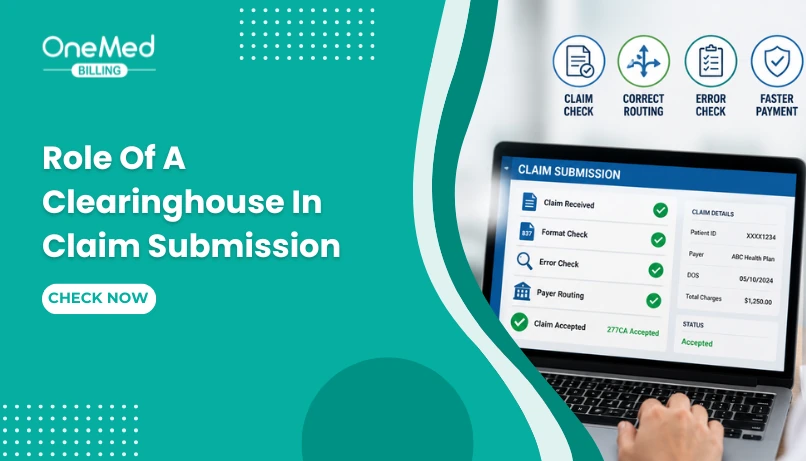
When a claim fails at the clearinghouse, it usually does not reach the payer at all. The clearinghouse checks the claim for missing details, payer ID issues, formatting errors, and other front-end problems before it moves forward. If you want to understand this step in more detail, read our guide on what a clearinghouse does during claim submission.
This can happen because of simple issues like a wrong payer ID, missing member ID, invalid NPI, incorrect date of birth, missing diagnosis code, wrong place of service, or formatting errors. These are not payer denials yet. They are front-end rejections that must be corrected before the claim can move forward.
The problem is that every rejected claim adds more work. The billing team has to open the claim again, find the error, correct it, resubmit it, and then check whether it was accepted the second time. If the same errors keep happening, claims start piling up before they even reach payer review.
A clearinghouse rejection is a warning sign that the pre-submission process needs attention. The goal is to submit claims that are ready for payer review the first time. If repeated corrections are slowing your billing team down, you can contact our team to see how our claim submission services can help make the process cleaner before claims go out.
What to Fix First If Your Clean Claim Rate Is Low?
If your clean claim rate is low, look at where claims are breaking before they reach payment review. Most issues come from a few repeat workflow gaps, not random payer problems.
Start with these areas:
- Check for wrong patient details, inactive coverage, old insurance, missing COB information, or incorrect payer order. These issues can stop a claim before coding is even reviewed.
- If a service needs approval, confirm it before the visit or before the claim goes out. Missing or mismatched authorization can turn a valid service into a preventable denial.
- Review repeated CPT, ICD-10, HCPCS, or modifier issues. If the same coding edits keep appearing, the problem may be documentation, coding review, or payer-specific rules.
- Confirm NPI, taxonomy, billing provider, rendering provider, service location, and place of service. These details must match payer records.
- These reports show where claims are failing most often. If the same edits keep coming back, review your claim scrubbing process and fix the issue before it reaches submission.
Fix the errors that repeat the most first. That will usually improve clean claim performance faster than trying to solve every small issue at once.
Conclusion
Achieving clean claims is not about adding more work to the billing process. It is about making sure the right checks happen at the right stage.
Registration should catch patient and insurance issues. Eligibility should confirm active coverage and payer order. Coding should match the documentation. Authorization should be verified before the claim is prepared. Claim scrubbing should catch technical and payer-specific issues before submission. Clearinghouse reports should be reviewed to spot repeat problems.
When each step does its job, fewer claims come back for basic corrections. The billing team spends less time reopening the same accounts, and claims have a better chance of moving into payer review without avoidable delays.
Frequently Asked Questions
Find quick answers to common questions about this topic, explained simply and clearly.
What is the difference between a clean and unclean claim?
A clean claim is complete, accurate, and ready for payer processing without correction. An unclean claim has missing, incorrect, or incomplete information that can cause rejection, delay, or resubmission.
How to calculate clean claim rate in medical billing?
Clean claim rate is calculated by dividing clean claims by total claims submitted, then multiplying by 100. Formula: Clean Claim Rate = (Clean Claims ÷ Total Claims Submitted) × 100
What is a good clean claim rate?
A good clean claim rate is usually 95% or higher. A rate below 90% may show problems with eligibility, coding, documentation, authorization, or claim submission workflow.
How does CMS define a clean claim?
CMS defines a clean claim as a claim with no defect, missing required information, or issue that prevents timely payment or requires extra development before processing.