
Home Specialities Infusion Therapy
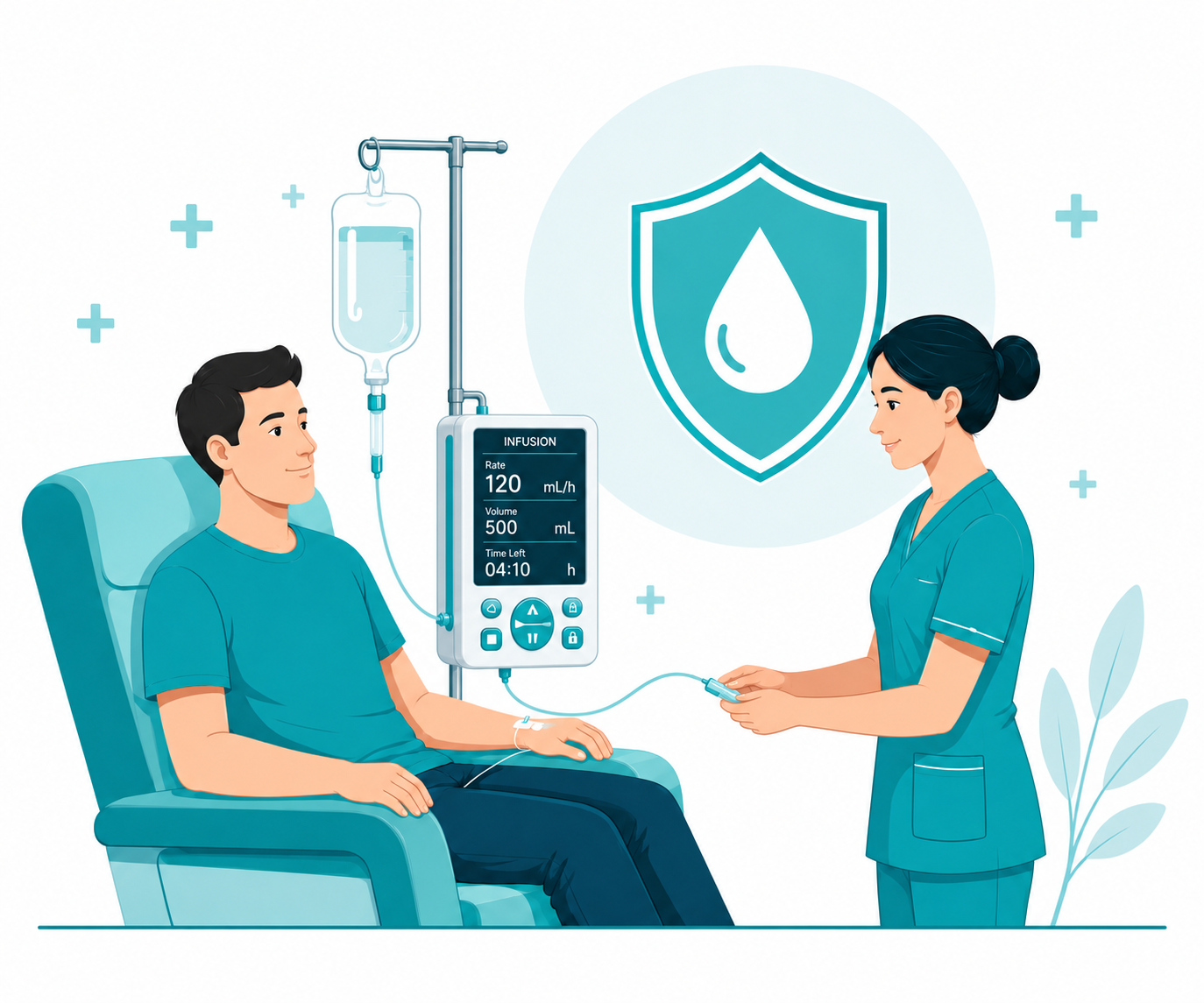
Biologic + therapeutic
high-drug-cost billing
Infusion-certified coders
chart & NDC review
All major payers
commercial, Medicare & MA
Underpayment recovery
on claims marked paid
The shortfall is not in the rejection. It is in the milligrams.
Ask an infusion center where the pain is and the answer is always prior auth. Some issues are real but obvious. They are not always the most costly. The costly one clears cleanly and pays short: a shorted drug conversion, a truncated hour, a wastage line quietly zeroed.
Across the 29 infusion therapy revenue cycles we've analyzed, an average of 5.1–9.2% of gross revenue is withheld this way. For a USD 14M center, this can mean USD 714K to USD 1.29M in annual revenue loss, and the impact compounds across every payer contract cycle.
See it on your claimsWhat 5.1–9.2% looks like on a $14M center
The 5.1–9.2% range reflects OneMed's analysis of 29 infusion revenue cycles; the dollar figures apply that range to a $14M example center. Your actual exposure depends on payer mix, drug mix, and documentation.
Five places the milligrams go missing.
Infusion billing is a maze of J-codes, NDC crosswalks, time-based units, and strict hierarchies. High-volume payer systems lean on that complexity, and the shortfalls settle into claims you already booked as paid.
NDC-to-J-code crosswalk shortfall
Payers convert the reported NDC in the manufacturer's unit, e.g. mL, to J-code units (e.g. 10 mg) using crosswalk tables. Outdated tables, the wrong conversion factor, or mapping to a cheaper equivalent NDC can cause fewer milligrams to be reimbursed than were administered. That can quietly underpay the drug by 10 to 30 percent.
Time-based unit truncation
96365 covers the initial hour and 96366 each additional hour, and 96366 requires documented exact start and stop times over the threshold. If the note says "infused over two hours" without exact times, payers silently drop the 96366 and pay only the initial hour.
Infusion hierarchy misapplication
With multiple infusions in one session, only one "initial" service is billed, by a strict national hierarchy: chemotherapy, then therapeutic, then hydration, then IV push. Payer rules sometimes pay the cheaper hydration code as primary and bundle or downcode the therapeutic infusion.
Drug wastage (JW / JZ) trap
Single-dose vials rarely match the prescribed dose; the discarded remainder is billable wastage on a separate JW line. Payers routinely pay the primary drug line but zero the JW line for "missing documentation" — even when it's charted.
"Incidental" supply bundling
IV start kits, flushes, and administration supplies are separately reimbursable under many contracts and specific Medicare guidelines. Payer bundling edits may still treat them as incidental and pay USD 0 unless they are billed with the correct modifiers.
The clock matters, and so does the CPT rule.
Take time-based units. Infusion administration is time-tiered. CPT 96365 covers the initial hour, and CPT 96366 covers each additional hour. CPT 96366 requires documented exact start and stop times that meet the threshold.
When the record says "infused over two hours" without exact times, payers silently drop the 96366 and pay only the initial hour. The rule is public, and you can check it against your own remits. Across thousands of longer infusions, dropped additional-hour units add up quickly.
See it on your own claimsA 2h 15m infusion, paid short
The 96365 and 96366 time-tiered rule is standard CPT. The approximate USD 100 additional-hour value is illustrative and should be confirmed against your contracted rates. Actual exposure depends on your infusion volume and durations.
Nobody's checking the milligrams against the math
It isn't effort. No team can hand-reconcile NDC math and start-stop times across thousands of infusions a month.
The "paid means paid" blind spot
Attention goes to $0 rejections. When a claim is marked paid, the file often closes. No one rechecks 8,000 infusion claims against the NDC crosswalk to find silent drug-cost shortfalls.
No crosswalk verification
Re-checking NDC-to-J-code conversions on hundreds of biologic claims a month by hand isn't realistic for a standard billing team.
No time-based unit auditing
Most centers assume a documented two-hour infusion was paid for two hours. They often do not check the remit to see whether the 96366 units were truncated.
We audit the milligrams, the minutes, and the modifiers.
Infusion-certified coders inside your existing system. There is no EHR change and no operational disruption. We add human review of the nursing notes and NDC details that rigid payer edits do not evaluate.
ClearView operational visibility
Our ClearView dashboard gives leadership real-time visibility. It can flag when a biologic paid at USD 8,200 against a USD 9,800 NDC crosswalk expectation, or when a time-based infusion paid only at the base rate, without changing how your staff logs in.
Expert clinical chart audit
Flagged claims route to our infusion-certified coders, who work inside your system to read the nursing notes, verify exact start and stop times, confirm the NDC matches the drug administered, and check wastage documentation.
Targeted clinical appeal
We draft documentation-backed appeals with the clinical, timing, and NDC details needed to support correct payment.
Payer pattern mapping
We track which payers truncate your 96366 units or drop your JW lines, then pursue systematic corrections and contract fixes instead of treating each claim as a one-off issue.
The 2026 OneMed Infusion Revenue Leak Index.
This is not a model or a single success story. It is the pooled result of every infusion cycle we audited in the last 18 months.
29
infusion revenue cycles audited
198,000+
claims audited
$3.51M
recovered for clients
90.7%
recovery rate on appeals
Of that $3.51M, here's where it had been hiding. The costliest drugs and longest infusions are often underpaid the most. That is the baseline problem, not the exception.
| Underpayment pattern | Share of recovered value |
|---|---|
| NDC-to-J-code crosswalk shortfalls | 31% |
| Infusion hierarchy misapplications | 22% |
| Time-based unit truncations | 19% |
| Drug wastage (JW/JZ) traps | 18% |
| "Incidental" supply bundling | 10% |
Aggregated across OneMed infusion underpayment audits over the trailing 18 months ($3.87M identified, $3.51M recovered). Individual results vary by payer, documentation, and contract terms.