
Home Specialities OB-GYN
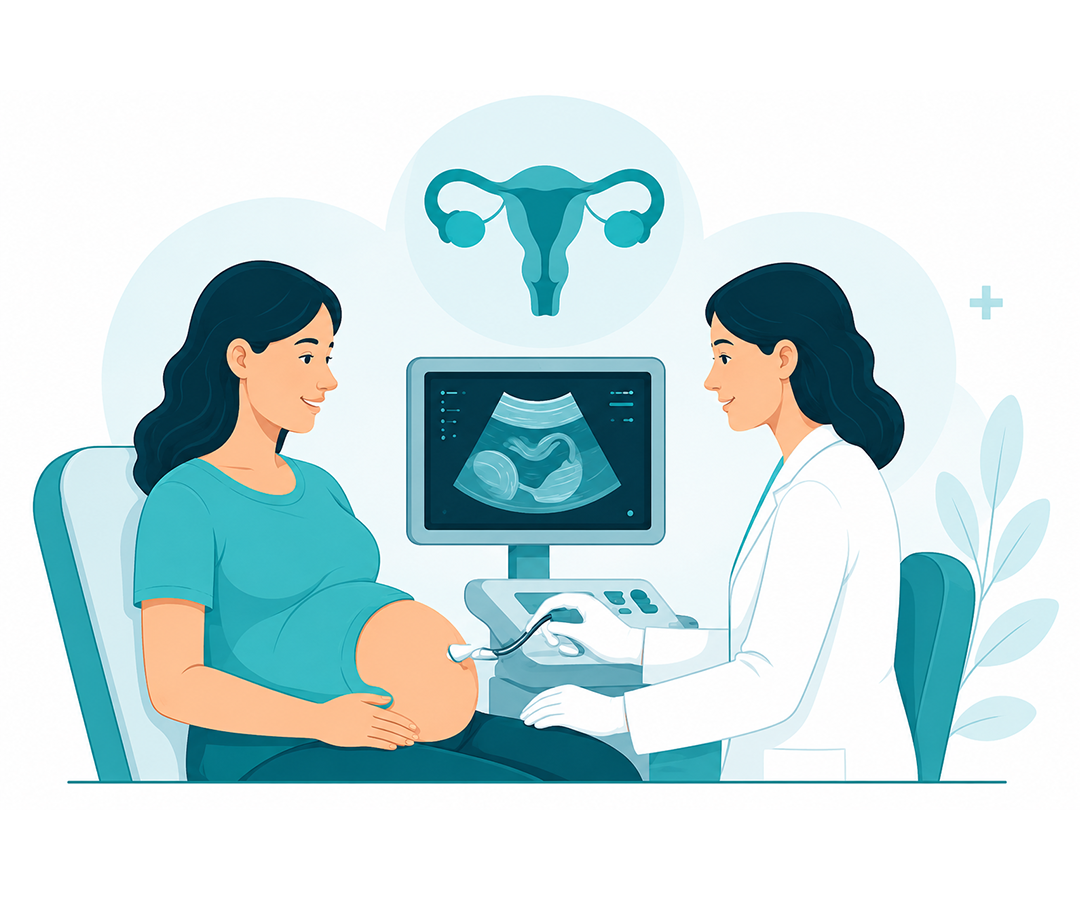
Flat-fee maternity
one payment, months of care
OB-GYN-experienced reviewers
chart-level review
Obstetrics & gynecology
office through OR
Revenue recovery
on claims marked paid
You're paid for the pregnancy you expected.
The flat fee assumes a textbook pregnancy: regular visits, a straightforward delivery, an uneventful recovery. That model can work for routine pregnancies. It breaks down when a pregnancy becomes high risk because the care now requires extra monitoring, imaging, visits, and clinical attention. That's real work with real cost, and it's meant to be paid separately.
Across the 26 OB-GYN practices we've analyzed, an average of 5–8% of revenue quietly disappears this way. For a USD 6M practice, that can mean USD 300K to USD 480K in annual revenue loss, and the loss repeats with every complicated pregnancy.
See what got absorbedWhat 5–8% looks like on a $6M practice
The 5–8% range reflects OneMed's analysis of 26 OB-GYN practices; the dollar figures apply that range to a $6M example practice. Your actual exposure depends on payer mix, case mix, and documentation.
One payment stretched across nine months.
Here's the shape of the problem. The flat fee runs from her first visit all the way through delivery and after-care. Additional care required by a complicated pregnancy should often be billed outside the global payment. When it is incorrectly pulled into the flat fee, months of added work can go unpaid.
But this pregnancy wasn't routine:
Illustrative of a pattern we see often. What's included in the flat fee and what can be paid separately depends on the care given, your contracts, and each insurer's rules.
Five ways your work disappears into someone else's payment.
These are the patterns we find most often. Every one of them sits inside a claim that already came back marked paid.
High-risk care, absorbed into the flat fee
When a pregnancy becomes complicated by gestational diabetes, preeclampsia, preterm labor, or another high-risk condition, the practice provides more monitoring, more scans, and more frequent visits. That care sits outside the flat fee and should be paid on its own. Instead it's often pulled inside it, and fifteen extra high-risk visits pay nothing.
The office visit erased by the procedure
A patient may come in for an annual visit, and the provider may handle a separate issue during the same encounter, such as placing a device, taking a biopsy, or removing a lesion. You bill for the visit and the procedure. The visit gets zeroed out as 'included,' even though you did both.
Imaging folded into the visit
Routine screening is one thing. Imaging ordered to answer a specific clinical question, such as checking growth, investigating pain, or assessing the placenta, is separate and significant clinical work. It frequently gets folded into the visit or the delivery fee and paid $0.
Postpartum complications treated as routine
The flat fee covers routine recovery. A patient who returns with an infection, mastitis, or postpartum depression is a new medical problem, not routine after-care. Because the visit falls inside the recovery window, it often gets denied or zeroed as 'part of the delivery.'
The assisting surgeon nobody paid
Complex gynecologic surgery often needs a second surgeon. When one assists, that time and expertise should be paid. Insurers frequently refuse or zero it out on vague necessity grounds — even when the need was clear and documented.
Bandwidth, not effort
Your team isn't failing. They're fighting the claims that shout, because nothing points at the ones that go quiet.
They fight denials, not shortfalls
Your team is trained to attack claims marked denied. When a claim shows as paid, teams often move on because there is no obvious reason to question it. Nobody has time to check whether 'paid' meant paid correctly.
The volume trap
Thousands of claims a month across every provider. No team can hand-check each payment against your contracts and the chart. Teams have to triage, and quiet payment losses are often the first to be missed.
You can't see it from the deposit
As the owner you see one number a month. The small leaks on individual claims are invisible from there, and you can't manage what nothing shows you.
Total visibility, zero disruption.
You get clear owner-level visibility, experienced reviewers, and front-end fixes that prevent the same issues from recurring, all inside the systems you already use. No EHR change, no disruption to your clinic.
See it clearly
Our ClearView dashboard gives you a straight answer to one question: what did this care actually pay, versus what it should have? Our process flags high-risk care absorbed into the global payment, visits erased by bundling, and imaging folded into another service without changing how your staff works.
Experienced people review it
When something looks short, it goes to reviewers who know OB-GYN billing. Specialty reviewers read the chart and determine whether payment is actually owed. That requires human judgment, not guesswork.
We build the appeal
If care was unfairly absorbed, we draft the appeal with the exact clinical documentation needed to get the decision reversed and get you paid.
Fix it at the front end
We help your providers document the clinical detail that supports high-risk care and separate procedures from the start, so you are not recovering the same revenue again next year.
The 2026 OneMed OB-GYN Profit Index.
We reviewed anonymized results from every OB-GYN practice we worked with over the last 18 months. The patterns became clear when someone looked closely at claims already marked as paid.
26
OB-GYN practices analyzed
164,000+
claims reviewed
$215K
average recovered per practice
89%
appeal success rate
Here's where that money had been hiding. Note the pattern: the biggest leaks are the everyday things you do constantly, not the rare big-ticket cases.
| Where the money was found | Share of what we recovered |
|---|---|
| Office visits erased alongside a procedure | 29% |
| Diagnostic imaging folded into a visit | 24% |
| High-risk pregnancy care absorbed | 22% |
| Assisting surgeons never paid | 16% |
| Postpartum complications treated as routine | 9% |
Aggregated across OneMed OB-GYN engagements over the trailing 18 months. Individual results vary by practice, payer mix, and starting point.