

Home Specialities Orthotics & Prosthetics
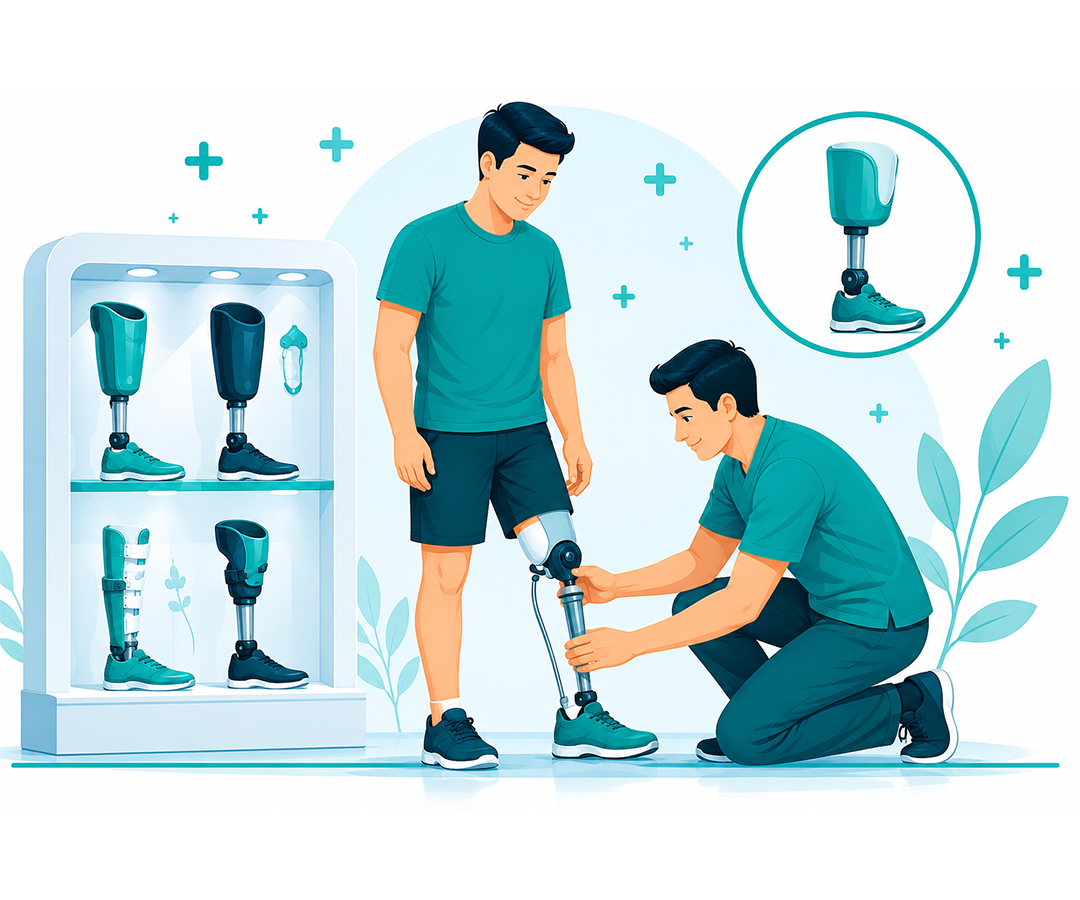
Checked before fabrication
not appealed after
O&P-experienced reviewers
order-level review
Medicare & commercial
every payer you bill
Clawback protection
years of revenue defended
You carry the cost before anyone checks the paperwork.
Most practices risk their time. You risk your materials. By the moment a payer takes a position on the order, you've already bought the components, spent the fabrication hours, fitted the patient and sent them home walking. None of that can be undone, and none of it can be sold to someone else.
Across the 23 O&P practices we've analyzed, an average of 4–7% of revenue is either lost or exposed this way. On a $5M practice that's $200K–$350K a year — and unlike a denied visit, every one of these losses has a physical object attached to it that you paid for.
Check your ordersWhat 4–7% looks like on a $5M practice
The 4–7% range reflects OneMed's analysis of 23 O&P practices and covers both revenue underpaid and revenue exposed to recoupment; the dollar figures apply that range to a $5M example practice. Your actual exposure depends on payer mix, device mix, documentation, and audit history.
It fits one person. That's the whole problem.
A reversed payment in most specialties means unpaid labor. Here it means you're holding an object built to the contours of a single human being — unsellable, unreturnable, and already paid for out of your pocket.
When the payment is reversed, here's what you're left holding.
Illustrative of the cost structure, not a quote. Actual material, fabrication and fitting costs vary widely by device and practice.
Five gaps in a file you didn't write.
Nearly every one of these originates outside your building — in a physician's office, on their schedule, in their wording. The consequence lands entirely on you.
The order that doesn't say enough
Payers require the prescribing physician's order to carry a specific set of details — who, when, exactly which device, the diagnosis, how long it's needed, and a signature. An order that simply says the patient needs a knee brace is missing most of that. It reads like a perfectly normal instruction from a busy doctor, and it's enough to lose the payment.
The visit that happened too long ago
The patient generally must have seen the prescribing physician within a set window before the order is written, and those notes need to connect their condition to this device. Seven months instead of six, or notes that never mention the device, and the claim fails — regardless of how well the device fits or how much it helps.
Why they need it, never actually said
There's a real difference between "needs a back brace for stability" and a note explaining that the patient can't stand ten minutes without severe pain and can't work because of it. The first is a description. The second is the justification a payer requires — and without it the claim is downgraded or refused.
Delivery that was never signed for
You have to be able to prove the device reached the patient and that they were shown how to use it. Without the signed receipt and training record, an auditor is entitled to assume neither happened — and take back the entire payment for a device you know is being worn every day.
The replacement called premature
Replacements and repairs are only covered under specific conditions — genuine wear, documented damage, a real change in the patient. If the file doesn't explicitly say why the old device had to go, the claim is refused as premature and you absorb the cost of the new one.
Bandwidth, not effort
Nobody here is doing anything wrong. The document that decides your money simply isn't yours, and nobody's job is to police it.
Your clinicians build, they don't audit
Your orthotists and prosthetists trained to measure, fabricate and fit. Cross-referencing every order against a technical checklist — and policing another practice's wording — isn't their job and was never their training.
The decisive document isn't yours
The order comes from a physician who doesn't work for you, written on their schedule in their words. You bear the entire financial consequence of a document you have no authority over.
You can't see it from the deposit
The deposit looks healthy right until the audit letter lands. Paperwork gaps never show up in a bank balance, and you can't manage what nothing shows you.
We check the order before you cut material.
The whole point is sequence. Once the components are bought and the device is shaped, your options are gone. Checked beforehand, a missing element is a two-minute phone call to the prescribing office — not a five-figure write-off three years later. All inside the systems you already use.
Check it before anything is cut
Our ClearView dashboard reviews each order ahead of fabrication and flags what's missing — an absent element, a visit outside the window, a functional justification that was never written down.
A person, not a guess
Flagged orders go to reviewers who know O&P documentation. They read the file and decide whether it genuinely holds up — then tell you plainly what's needed.
We go back to the prescribing office
This is the part your team has no time for and no leverage over. We chase the physician's office for the missing element or the corrected note — before you commit materials, while it's still a phone call.
Protect delivery, then recover the rest
We make sure delivery and training are signed for at the fitting, and where a payer has already paid short or refused a justified replacement, we build the appeal and pursue it.
The 2026 OneMed O&P Profit & Protection Index.
We aggregated the anonymized results from every O&P practice we worked with over the last 18 months — here's what changed once the orders were checked before fabrication instead of after payment.
23
O&P practices analyzed
34,000+
claims reviewed
$185K
average recovered per practice
↓89%
average clawback exposure
First-pass approvals rose 18% on average. Here's where the money was recovered or protected — and notice that the top two are simply what a document did or didn't say before you ever started building.
| Where the money was found or protected | Share of the total |
|---|---|
| Functional need never spelled out | 28% |
| Orders missing required elements | 24% |
| Delivery or training never signed for | 19% |
| Physician visit outside the window | 16% |
| Replacements refused as premature | 13% |
Aggregated across OneMed O&P engagements over the trailing 18 months. Individual results vary by practice, payer mix, device mix, and starting point.